


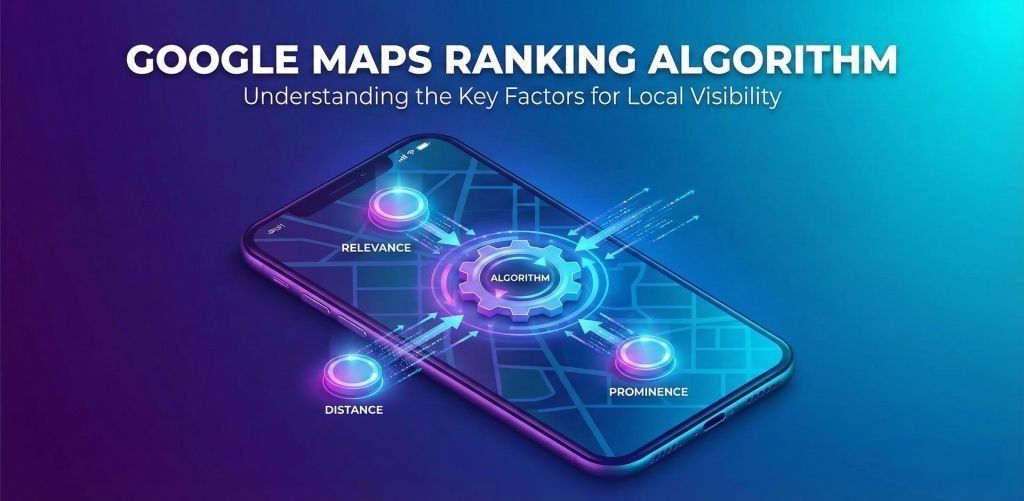
Is your business invisible on Google Maps? In 2026, simply having a listing isn’t enough. The Google Maps Ranking Algorithm has evolved into a sophisticated, AI-driven system that prioritizes real-world signals, user behavior, and “entity boundaries” over traditional keyword stuffing.
For business owners and marketers, understanding these shifts is critical. If you aren’t optimizing for the modern algorithm, you are handing customers to your competitors.
At YoGrow Solutions, we specialize in decoding these complex algorithmic changes to potentialize your local growth. This guide uncovers exactly how the Google Maps algorithm works in 2026 and how you can leverage it to dominate your local market.
The Evolution of Local Search: Why 2026 is Different
Gone are the days of the “7-Pack” and simple keyword matching. Google’s journey has been one of increasing complexity:
· Pigeon Update (2014): Tied local results closer to traditional web ranking signals.
· Possum Update (2016): Diversified results and filtered out businesses sharing the same address.
· Vicinity Update (2021): The “largest local update in years,” which heavily weighted strict proximity and clamped down on spammy keyword-stuffed business names.
· The AI Era (2024-2026): Now, Google uses Gemini-powered AI to understand images, videos, review sentiment, and real-world visitation data.
Today, the algorithm doesn’t just read text; it “sees” your business through the eyes of your customers.
The 3 Ranking Pillars: The “Holy Trinity” of Local SEO
Despite the AI revolution, the core foundation of the Google Maps algorithm remains rooted in three primary factors: Relevance, Distance, and Prominence. However, *how* Google measures these has changed drastically.
1. Relevance: “Do You Does This?”
Relevance asks: *Does this business listing match what the user is searching for?*
In the past, this was about matching keywords. In 2026, it’s about Semantic Understanding.
· Primary Category: This is your strongest signal. If you are a “Pizza Restaurant,” you won’t rank for “Italian Grocery” even if you sell pasta sauce, unless your secondary categories and website content support it.
· On-Page Signals: Google scans your website’s service pages to verify your GBP categories. Consistency is key.
· Review Content: Google scans review text for service keywords. “Great *oil change*” in a review reinforces your relevance for auto maintenance.
2. Distance: “Are You Nearby?”
Distance (Proximity) is the most immutable factor. Google Maps is, by definition, a location-based service.
· Proximity Radius: Users searching for “coffee shop” usually want one within walking distance (0.5 miles). Users searching for “emergency plumber” might accept a wider radius (10+ miles).
· The “Service Area” Myth: Setting a huge service area (e.g., “Entire USA”) does NOT help you rank nationally on Maps. Your ranking power is strongest where your physical address is verified (your “Centroid”).
· User Location vs. Search Location: Ranking changes block-by-block. This is why you need hyper-local tracking tools.
3. Prominence: “Do People Trust You?”
Prominence is where the winners are separated from the losers. This factor measures how well-known and trusted your business is.
· Review Velocity & Sentiment: It’s not just 5 stars; it’s *how often* you get them and what people say. Keywords in reviews (e.g., “best pizza in Brooklyn”) are gold.
· Brand Mentions: Articles, directories, and news mentions across the web build your authority.
· Website Authority: A strong organic SEO presence on your website directly boosts your Maps ranking. If your website ranks #1 organically, your Map pack ranking often follows.
The New 2026 Ranking Factors: AI, Entity Boundaries & NavBoost
This is where the game has changed. The Google Maps Ranking Algorithm 2026 update introduced stricter filters and smarter sensors.
What is “Entity Boundary”?
Google now assigns an “Entity Boundary” to your business. This is a semantic filter. If your business name is “Bob’s Burgers” but you try to rank for “Plumbing Repairs,” Google’s AI identifies a conflict. Your “Entity” (a restaurant) does not match the service (plumbing). This prevents spam and ensures users get accurate results.
Actionable Tip: Ensure your business name, categories, and website content are 100% aligned to define a clear, non-conflicting entity.
NavBoost: The User Behavioral Signal
Google tracks how users interact with your listing. This is often referred to internally as NavBoost.
· Click-Through Rate (CTR): Do users click your listing over the one above it?
· Dwell Time: Do they stay on your profile, read reviews, or view photos?
· Direction Requests: This is a huge signal. If people request directions and actually drive there, Google verifies you are a real, popular destination.
· Click-to-Call: High intent actions signal relevance and satisfaction.
How AI & Multimodal Search Affect Rankings
Google Lens and visual search are now integrated into Maps.
· Visual Analysis: Google’s AI analyzes your photos. If you claim to be a “Luxury Hotel” but your user-uploaded photos look like a motel, your ranking drops.
· Video Content: Short vertical videos on your GBP are now a ranking signal, showing “proof of life” and engagement.
Google Business Profile Optimization: The 2026 Standard
Your Google Business Profile (formerly GMB) is your most valuable asset. Here is the step-by-step to perfection.
Step 1: Optimizing Your Primary Category
Choose carefully. If you are a specific lawyer (e.g., “Divorce Lawyer”), do not just choose “Law Firm.” Specificity wins. Use YoGrow Solutions’ audit services to identiy the exact category your top competitors are using.
Step 2: The “Active” Signals Strategy
Google loves alive businesses.
· Google Updates (Posts): Post weekly. Share offers, events, or “completed project” photos.
· Q&A: Pre-populate your Q&A section with common questions. It helps voice search users find you.
· Photos: Upload new photos weekly. Encourage customers to add photos (User Generated Content is a massive trust signal).
Step 3: Complete Every Attribute
Fill out every field: “Women-led,” “Wheelchair accessible,” “WiFi availability.” These are often used as filters by voice search assistants (e.g., “Find a wheelchair accessible Italian restaurant”).
High-Intent Keywords: Targeting the “Ready-to-Buy” User
Stop optimizing for “shoes.” Start optimizing for “buy running shoes near me open now.”
High-intent keywords convert 3x – 5x higher than generic terms.
· Transactional: “Hire,” “Price,” “Cost,” “Appointment.”
· Commercial: “Best,” “Top rated,” “Review.”
YoGrow Solutions helps clients identify these money-making keywords to ensure you aren’t just getting traffic, but getting *customers*.
The Role of Reviews in the AI Era
In 2026, AI reads your reviews. It understands sentiment beyond the star rating.
· Context Matters: A 4-star review that says “Great service but expensive” tells Google you are “High End.” A 4-star review saying “Good value but eager staff” says “Budget Friendly.”
· Response Time: Replying to reviews within 24 hours shows engagement, a positive ranking factor.
· The “Keyword in Review” Strategy: politely ask happy clients to mention the specific service they received. “Thanks for the great *roof repair*” helps you rank for “roof repair.”
Advanced Strategy: Fighting Spam to Win
The Maps ecosystem is full of spammers (fake names, fake locations).
· Suggest an Edit: If a competitor is using a fake name (e.g., “Best Plumber New York” instead of their legal name), report them via “Suggest an Edit.”
· Clean the SERP: When spammers are removed, you move up automatically. It’s the fastest way to improve rankings in dirty markets.
Measuring Success: Beyond the Rank
Don’t just look at “Rank #1.” Look at:
1. Grid Tracking: Use tools to see your rank across the entire city, not just at your office.
2. GBP Insights: Monitor “calls” and “direction requests” month-over-month.
3. Revenue: The ultimate metric. Are Maps leads turning into sales?
The YoGrow Edge: Data-Driven Local Domination
At YoGrow Solutions, we don’t guess. We use data.
Our Local SEO Authority Audit analyzes your:
· Entity consistency across 50+ directories (Citations).
· Competitor category gaps.
· Review sentiment analysis (using AI).
· Geographic ranking heatmaps.
We help businesses in the USA move from “on the map” to “dominating the map.” We don’t just optimize for the algorithm; we optimize for the human experience that feeds the algorithm.
FAQ: Common Questions on Google Maps Ranking
Q: How long does it take to rank on Google Maps?
A: With a proper strategy, you can see movement in 30-90 days. Competitive markets (like Personal Injury Law or HVAC in major cities) may take 6+ months of consistent effort.
Q: Does posting on Google Business Profile help ranking?
A: Yes. Regular posts signal to Google that your business is active, which is a minor but effective ranking boost. It also improves conversion rates.
Q: Can I rank in a city where I don’t have an office?
A: Generally, no. Google Maps prioritizes physical proximity. You need a verified address in that city to rank effectively in the Local Pack. Creating fake “virtual offices” is risky and can get you suspended.
Q: Why did my Google Maps ranking drop suddenly?
A: Common reasons include: a new competitor entered the market, you received negative reviews, your category was changed, or Google updated its algorithm (like a Core Update or Spam Update). An audit is usually needed to diagnose the cause.
Conclusion: Adapting to the Future of Local Search
The Google Maps Ranking Algorithm is no longer a static checklist. It is a dynamic, AI-learning ecosystem. To win in 2026, you must build a brand that is Relevant, Prominent, and Trusted.
Don’t let your competitors steal your local traffic. Partner with YoGrow Solutions today and turn your Google Maps listing into your #1 source of revenue.
—
**Ready to Grow?**
YoGrow Solutions Pvt Ltd – Your Top Growth Partner.
· Website: https://yogrowsolutions.com
· Email: info@yogrowsolutions.com
· Phone: +1 (571) 408-6124
· Address: 418 BROADWAY, ALBANY, NY 12207




Leave A Reply Now