


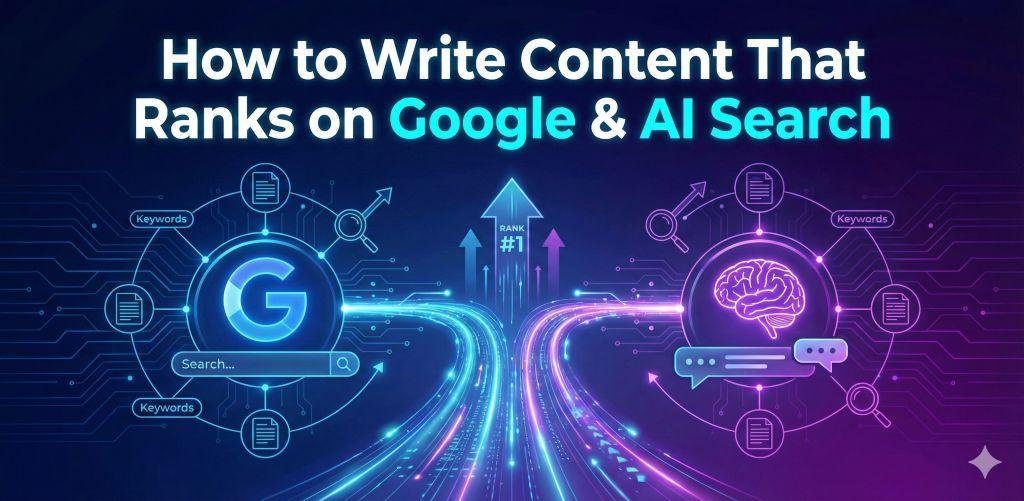
The digital landscape has shifted beneath our feet. In 2026, ranking on Google isn’t just about satisfying an algorithm; it’s about convincing complex AI models that you are the definitive authority on your topic. With the rise of Google’s AI Overviews (formerly SGE) and the dominance of “entity-first” indexing, the old playbook of keyword stuffing is obsolete.
If you’re asking, “How do I write content that ranks on Google & AI Search today?” the answer lies in a blend of technical precision, deep expertise, and a user-centric approach. At YoGrow Solutions, we help businesses navigate this new era, turning content into a powerful growth engine.
This comprehensive guide will walk you through the strategies you need to dominate the search results in 2026.
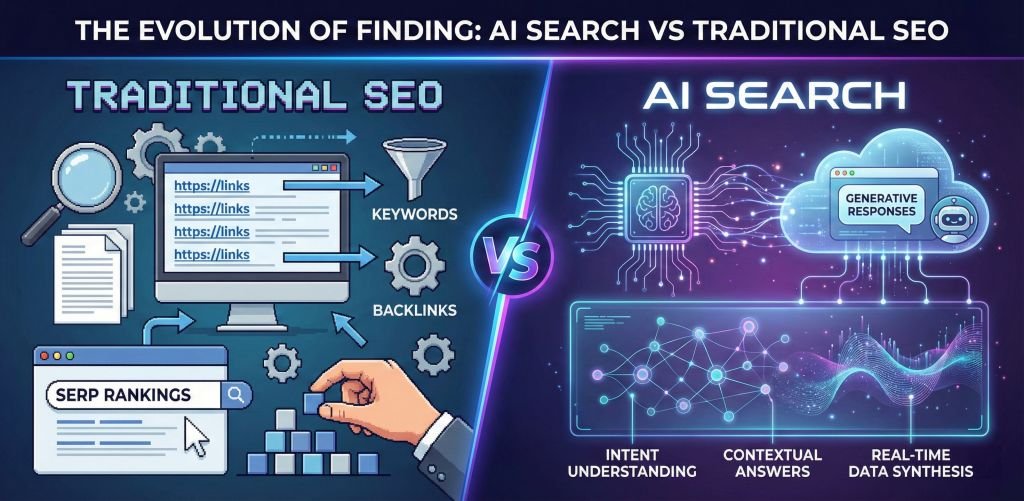
Gone are the days when specific keyword density guaranteed a spot on Page 1. Today, Google’s algorithms, powered by Large Language Models (LLMs), understand content semantically. They look for Entities—concepts, people, places, and brands—rather than just strings of text.
AI Search (like Google’s AI Overviews) doesn’t just list links; it synthesizes answers. To rank here, your content must be structured, factual, and easy for AI to parse. It’s no longer enough to be relevant; you must be cited as the source of truth.
To write content that ranks, you must adhere to the foundational pillars that Google values most.
E-E-A-T stands for Experience, Expertise, Authoritativeness, and Trustworthiness. In the age of AI-generated content, Google places a premium on human insight.
Experience: Demonstrate that you have actually used the product or provided the service. Use phrases like “In our experience at YoGrow Solutions…” or “When we analyzed…”.
Expertise: Go deep. Thin content is dead. Provide detailed explanations, data, and technical nuance that generalist AI cannot replicate.
Authoritativeness: Build your brand’s reputation. Get backlinks from reputable sites and ensure your authors have clear bios.
Trustworthiness: Cite your sources. Ensure your site is secure (HTTPS) and your business information is transparent.
Search engines now build a “Knowledge Graph” of your brand. They want to know who you are and what you are an expert in.
Focus on Topics, Not Just Keywords: Instead of targeting one keyword, cover an entire topic cluster. Create a “pillar page” that covers “Content Marketing” broadly, and link it to cluster pages about “SEO Writing,” “AI Content Tools,” and “Keyword Research.”
Strengthen Your Brand Entity: Ensure your N.A.P. (Name, Address, Phone) is consistent across the web. YoGrow Solutions, for instance, maintains consistent profiles across all major directories to signal trust.
Here is your blueprint for creating high-quality, SEO-optimized content.
Don’t just guess what people are searching for. Use tools like Google Keyword Planner and Ahrefs to find high-intent keywords.
Primary Keyword: “How to write content that ranks”
Secondary Keywords: “Content writing for SEO,” “Google ranking factors 2026,” “AI search optimization.”
LSI Keywords: “User intent,” “Semantic search,” “Zero-click search.”
Identify the User Intent: Are they looking for a quick tip (Informational) or a service provider (Transactional)? Align your content accordingly.
Wall-of-text content fails with both humans and bots. Structure your content for easy extraction.
Use Clear Headings (H1, H2, H3): Your H1 is your main title. H2s are your main points.
Bullet Points and Lists: deeply loved by AI for extracting “featured snippets.”
Short Paragraphs: Keep it punchy. 3-4 sentences max.
For AI Overviews, the “Answer-First” approach is critical. Start each section with a direct, concise answer to the question in the heading. Then, expand on it with details and examples. This increases your chances of being the source text for an AI summary.
Google loves fresh content. Update your articles regularly with the latest statistics and trends for 2026.
Add Original Data: Conduct your own mini-studies.
Contrarian Views: Don’t just parrot the top result. Offer a unique perspective.
Multimedia: Include images, videos, or infographics to keep users engaged (Dwell Time is a ranking signal).
Ranking in the AI snapshot requires specific tactics:
Schema Markup: Use Article, FAQ, and Organization schema to help bots understand your content context.
Fact-Heavy Content: AI loves facts, dates, and names. Be specific.
Conversational Tone: Optimize for voice search by writing in a natural, conversational style.
At YoGrow Solutions, we don’t just write content; we engineer growth. Our approach to content that ranks goes beyond basic SEO. We integrate:
Data-Driven Strategies: We use advanced analytics to identify the exact opportunities your competitors are missing.
Local SEO Mastery: From our headquarters in New York, we help businesses dominate both local “Near Me” searches and national rankings.
Entity Building: We help you become the authority in your niche.
If you are a US business looking to scale, you need a partner who understands the nuance of the 2026 search landscape. We are that partner.
Writing content that ranks on Google and AI Search is a multifaceted challenge. It requires a commitment to quality (E-E-A-T), a deep understanding of user intent, and a technical structure that speaks to AI. By following this guide, you can create a content engine that drives sustainable traffic and leads.
Ready to transform your digital presence?
Take your SEO to the next level with the Top Growth Partner.
Website: https://yogrowsolutions.com
Email: info@yogrowsolutions.com
Phone: +1 (571) 408-6124
Address: 418 BROADWAY, ALBANY, NY 12207
We recommend auditing and updating your core content at least every 6 months to maintain freshness and accuracy.
Yes, but depth matters more. Aim for 1200+ words for comprehensive guides, but ensure every word adds value.
AI is a great tool for outlines and drafting, but human editing is essential for E-E-A-T and voice.





Leave A Reply Now