


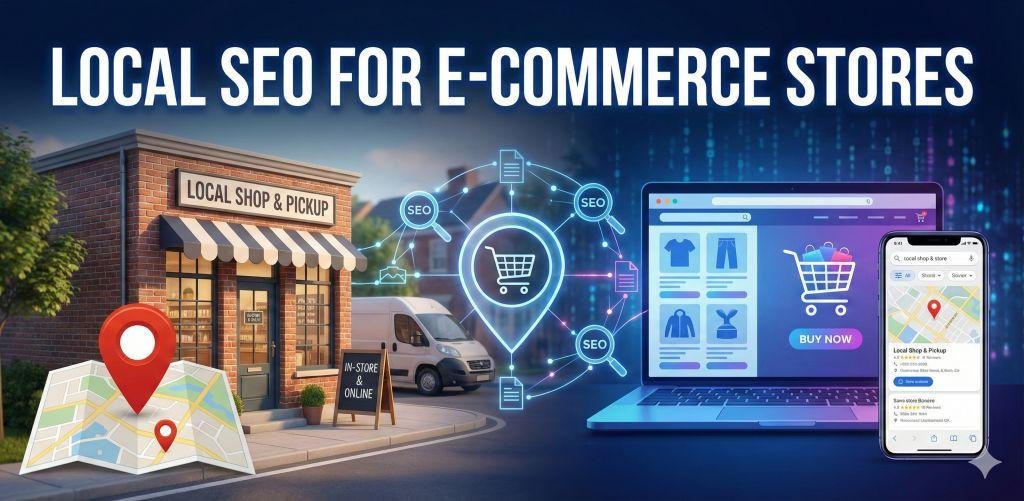
In the cutthroat world of 2026 e-commerce, the battle for global dominance is expensive. You’re competing against Amazon, Walmart, and Temu—giants with bottomless budgets. But there is a battlefield where they are weak, and you can win: Local SEO.
Many online retailers make the critical mistake of thinking Local SEO is only for brick-and-mortar shops. This is false. Whether you have a physical showroom, a warehouse, or simply ship to specific regions, local SEO for e-commerce is the most underutilized revenue channel today.
Why? Because search behavior has evolved. Users aren’t just searching for generic products; they are searching for trust, speed, and proximity. Queries like “shopify local seo” and “ecommerce near me optimization” are spiking because smart brands know that local relevance equals higher conversion rates.
This comprehensive guide will walk you through a proven, data-backed strategy to rank your online store for local searches, driving high-intent traffic that is ready to buy.
—
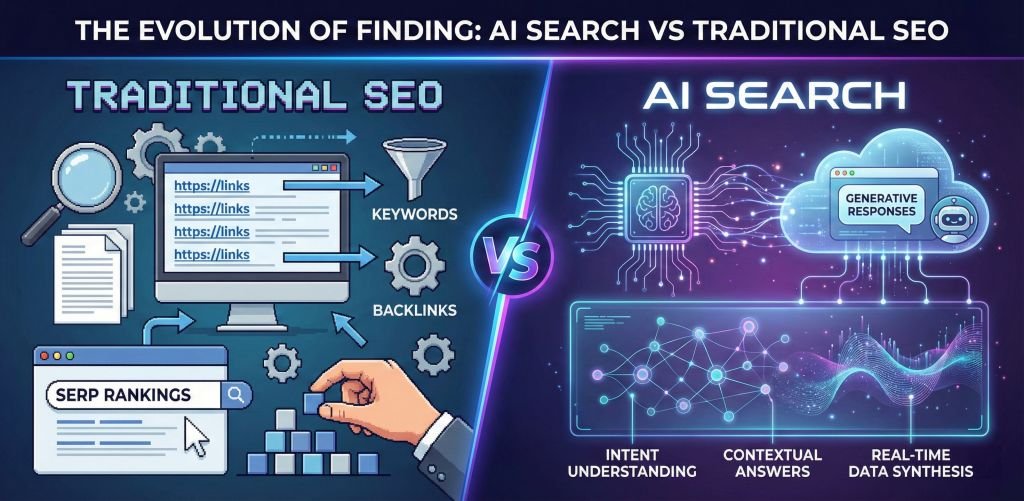
Local SEO for e-commerce is the process of optimizing your online store to rank for location-based intent. This doesn’t just mean showing up on a map; it means signaling to search engines (and AI search tools like SearchGPT and Gemini) that your business has relevance, authority, and presence in specific geographic areas.
In 2026, user intent is hyper-specific. A user searching for “buy running shoes” might browse. A user searching for “running shoes store near me” or “same day delivery running shoes Brooklyn” is pulling out their credit card.
By ignoring local signals, you are leaving the highest-converting traffic on the table.
—
To succeed, you must adopt a hybrid mindset. You are not just a URL; you are a business with a physical footprint (even if it’s just a distribution center).
Your Google Business Profile (GBP) is your digital storefront. For local SEO for online stores, this is non-negotiable.
Claim and Verify: Even if you don’t serve customers at your address (e.g., a warehouse), you can list as a Service Area Business (SAB).
Product Feed Integration: Use the Google Merchant Center to link your inventory directly to your local profile. When a user searches “google business profile for ecommerce“, they should see your products available locally.
“In-Stock” Badge: Activate local inventory ads logic. Showing “In stock – Pick up today” or “Next day delivery” skyrockets CTR.
Do not stuff city names into your footer. That is 2010 SEO. In 2026, you need dedicated, high-value Location Pages.
Structure of a Winning Location Page:
H1: Specialized [Product Category] in [City] – Fast Shipping & Local Support.
Local Content: Mention local landmarks, specific shipping carriers used in that region (e.g., “Shipped via OnTrac for California customers”), and local partnerships.
Map Embed: Embed a Google Map of your service area or warehouse location.
Local Reviews: Use dynamic widgets to show reviews specifically from customers in that region. “See what our Dallas customers are saying.”
Your product pages need to speak the language of the local buyer.
Schema Markup: This is the secret weapon. Implement `LocalBusiness` schema on your homepage and `OfferShippingDetails` schema on product pages. This tells Google exactly where you ship and how fast.
Keywords: Naturally integrate terms like “local seo for ecommerce website” and “ecommerce store locator seo” where relevant in blog content, but for product pages, focus on shipping speed and location availability.
Meta Tags: Test titles like “Buy [Product] – [City] Delivery Available”.
—
Different platforms require different tactical approaches.
Shopify local seo can be tricky due to rigid URL structures.
Tip: Use “Locations” in Shopify settings to manage inventory across multiple warehouses. This feeds directly into Google’s local inventory focus.
Apps: Use store locator apps that generate crawlable pages, not just iframe maps.
Woocommerce local seo offers more flexibility.
Tip: Use plugins to dynamically insert the user’s city into H1s or value prop banners (e.g., “Free Shipping to [User_City]”).
BigCommerce/Magento: For bigcommerce local seo or magento local seo extension users, ensure your canonical tags are set correctly on location pages to avoid duplicate content issues.
—
Content is how you build the “E-E-A-T” (Experience, Expertise, Authoritativeness, Trustworthiness) that Google demands.
Don’t just write generic guides. Write about how your products fit into the local lifestyle.
Idea: “Best Hiking Gear for [Local Trail Name]” vs “Best Hiking Gear”.
Idea: “How to style [Product] for [Local Event/Weather]”.
Use “local keywords for ecommerce” research to find these opportunities. If you sell winter coats, a guide on “Surviving Chicago Winters” builds immense local trust.
Yes. By optimizing for service areas, local shipping options, and regional content, online stores can capture local intent traffic.
It targets users with high purchase intent (transactional queries) and builds trust through local presence signals
Reviews are the currency of trust.
Automate Requests: Send review requests (SMS/Email) specifically asking for location context. “How are you enjoying your new shoes in Seattle?”
Respond: Reply to every review. Mentioning the location in your reply (naturally) reinforces relevance.
Local link building for ecommerce is challenging but powerful.
Sponsorships: Sponsor a local 5K run or charity. The link from a local .org domain is gold.
Local Press: Launching a new 2-hour delivery service in a city? Pitch it to local news.
Partner Suppliers: If you work with local manufacturers, get them to link to you as a “Local Distributor”.
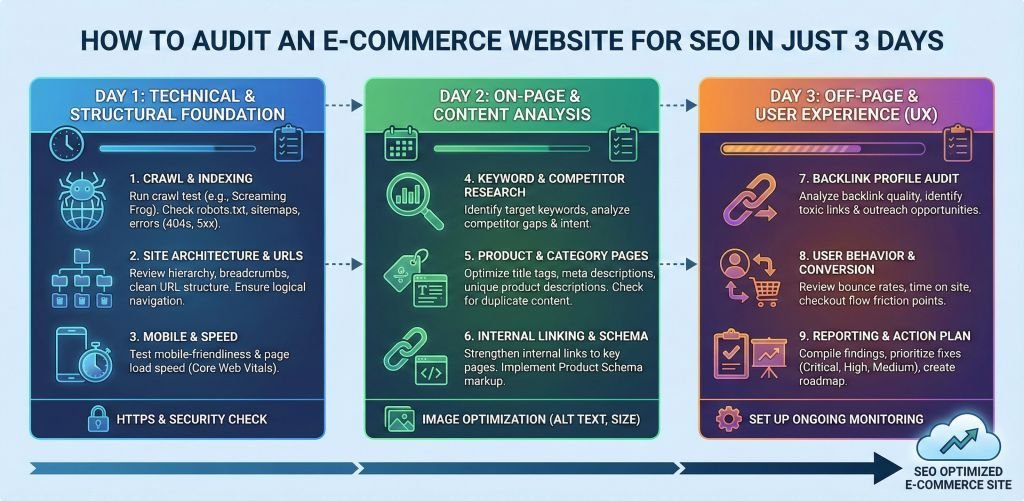
1. Audit: Run a local seo audit for ecommerce to find NAP inconsistencies.
2. Optimize GBP: Fully fill out your profile, including specific “Services” and “Products”.
3. Create Pages: Build unique location pages for your top 5 revenue cities.
4. Schema: Deploy LocalBusiness and Shipping schema.
5. Content: Publish 3-5 hyper-local blog posts this quarter.
The era of generic e-commerce is fading. The future belongs to brands that can blend the convenience of online shopping with the trust and relevance of a local neighbor.
By implementing a robust local seo strategy for ecommerce, you aren’t just ranking higher; you are building a moat around your business that international competitors cannot cross. You are becoming the “local option” for the digital age.
Don’t wait for 2027. Start optimizing your local shipping options seo and location pages today.
YoGrow Solutions specializes in data-driven Local SEO for e-commerce brands. We don’t guess; we engineer growth.
Website: https://yogrowsolutions.com
Email: info@yogrowsolutions.com
Phone: +1 (571) 408-6124
Address: 418 BROADWAY, ALBANY, NY 12207






Leave A Reply Now