



In 2026, “mobile-friendly” is no longer a feature—it is the baseline. With Google’s strict mobile-first indexing and over 70% of e-commerce traffic coming from smartphones, your store’s mobile performance dictates your revenue. If your site is slow, clunky, or hard to navigate on a standard phone screen, you aren’t just losing rankings; you are handing customers to your competitors.
This guide explores the critical strategies for Mobile SEO for e-commerce websites, ensuring your store ranks high and converts visitors into loyal buyers.
Google predominantly uses the mobile version of the content for indexing and ranking. This means your desktop site could be perfect, but if your mobile SEO is lacking, your rankings will tank across all devices.
Parity: Ensure your mobile site contains the same valuable content and structured data as your desktop site.
Touch Elements: Buttons and links must be tap-friendly. No one wants to zoom in to hit “Add to Cart.”
Pop-ups: Avoid intrusive interstitials that cover the main content upon load.
User experience is a direct ranking factor. For mobile, this boils down to speed and stability.
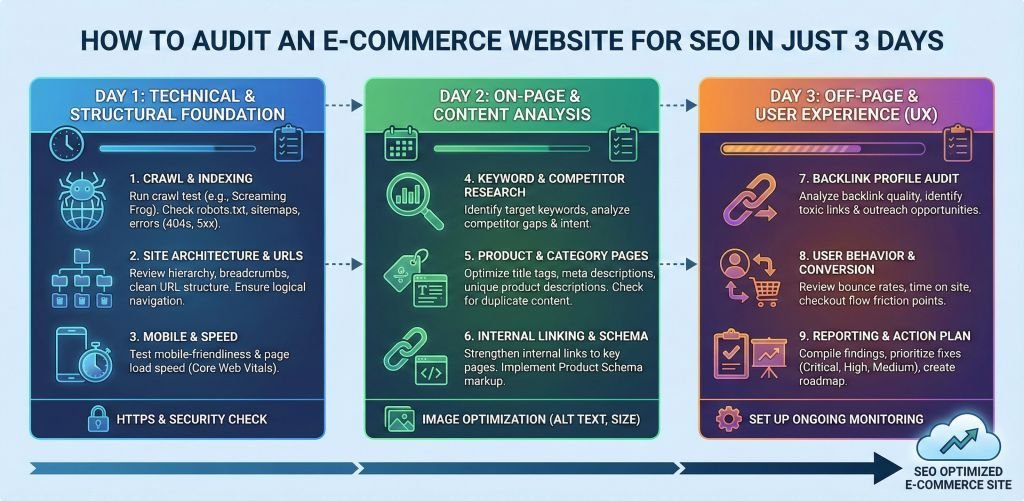
LCP (Largest Contentful Paint): Your main product image should load in under 2.5 seconds.
CLS (Cumulative Layout Shift): Elements shouldn’t jump around as they load.
E-commerce Tip: Compress all product images and use next-gen formats like WebP.
High-volume searches for responsive web design services indicate that store owners are waking up to the need for technical validation.
Mobile SEO isn’t just code; it’s design. Google rewards sites that users love.
Responsive Web Design: Your layout must adapt fluidly to any screen size. Responsive design and SEO go hand in hand.
Simplified Navigation: Use hamburger menus and sticky headers to make browsing effortless.
Streamlined Checkout: Reduce friction. Apple Pay, Google Pay, and one-tap checkout options reduce cart abandonment significantly.
To dominate the SERPs, you need to go deeper than the basics.
1. Schema Markup: Use `Product` and `Breadcrumb` schema to help Google understand your page structure.
2. Viewports: Ensure the meta viewport tag is correctly implemented.
3. Local SEO: Mobile searches are often local. Optimize for “near me” terms if you have physical pickup locations.
Optimizing an e-commerce platform like Shopify, Magento, or WooCommerce for mobile requires specialized knowledge. A generic “responsive” theme is often bloated with unused code that kills your speed.
At YoGrow Solutions, we optimize for speed and sales.
Mobile Audits: We use tools like the mobile friendly test and deep code analysis to find bottlenecks.
Custom Speed Optimization: We enhance your Shopify website builder themes to fly on 4G networks.
UX/UI Consulting: We ensure your mobile design converts traffic into revenue.
The future of e-commerce is in the palm of your customer’s hand. Investing in Mobile SEO is the single highest-ROI activity you can undertake in 2026. Don’t let a slow site slow down your growth.
Partner with YoGrow Solutions to build a mobile experience that ranks #1.
—
Website: https://yogrowsolutions.com
Email: info@yogrowsolutions.com
Phone: +1 (571) 408-6124
Address: 418 BROADWAY, ALBANY, NY 12207







Leave A Reply Now