


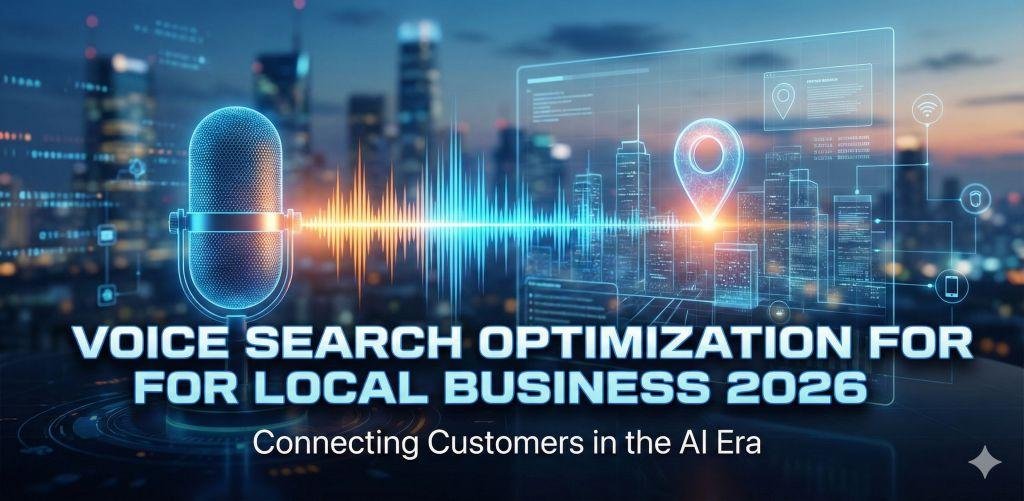
“Hey Google, find a plumber near me who is open now.”
In 2026, over 50% of all local searches are performed by voice. If your business isn’t optimized for these conversational queries, you aren’t just missing traffic—you’re invisible to the most high-intent customers in your market.
Voice search optimization isn’t about keywords anymore; it’s about conversation. This guide will teach you how to speak the language of Siri, Alexa, and Google Assistant to capture the modern local consumer.
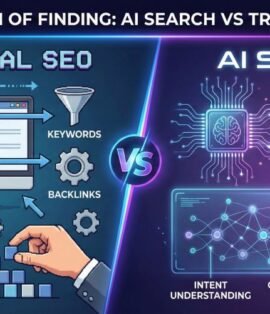
Traditional text search is robotic (“best pizza ny”). Voice search trends 2026 show a shift to natural language (“Where can I get the best deep dish pizza in New York?”).
This means your SEO strategy must evolve from “head terms” to long tail keywords for voice search.
1. Length: Queries are 75% longer than text searches.
2. Intent: Voice searches are often hyper-local and immediate (e.g., “open now”).
3. The Single Answer: Unlike a screen with 10 blue links, voice assistants often read back only one result. You are either #1, or you are zero.
Near me marketing strategy is the backbone of voice search.
The Tactic: Ensure your Google Business Profile (GBP) is flawless. Voice assistants pull address, hours, and “open status” directly from GBP.
Action: Update your business description to include neighborhood names (e.g., “Serving Downtown Albany and the Warehouse District”) to capture hyperlocal voice search traffic.
You need to write how people speak.
Conversational SEO tactics: instead of rigid headlines, use questions.
Example: Change “AC Repair Services” to “How do I fix a broken AC unit?”
Win the Snippet: Google’s featured snippet optimization is critical. If you own the “Position Zero” snippet, you are the voice answer. Provide clear, direct answers (40-60 words) to common questions.
An FAQ page is a goldmine for question based keywords SEO.
Identify Questions: Use tools or “People Also Ask” to find what your customers are asking.
Who is the best…
Where can I find…
How much does it cost…
Structure: Create a dedicated FAQ page optimization for voice with Schema markup. This tells search engines, “Here is a question, and here is the Answer.”
Speakable Schema Markup: This code specifically tells Google which parts of your content are suitable for text-to-speech playback.
Mobile Speed: Mobile SEO and voice search are inseparable. If your site takes 5 seconds to load, the voice assistant will skip you for a faster result.
Google Assistant: Heavily relies on Google Business Profile optimization. Focus on reviews and local relevance.
Siri (Apple): Pulls data from Apple Maps and Yelp. Ensure your listings there are accurate.
Alexa (Amazon): Often references Bing and Yext. Local citation building across these platforms is key.
1. Ignoring “Open Now”: If your hours aren’t updated, assistants won’t recommend you in the evening or on weekends.
2. Formal Language: Avoid jargon. Use simple, direct language that is easy to read aloud.
3. Neglecting Reviews: Voice assistants often filter by “best rated.” If you are under 4 stars, you are out.
Navigating natural language processing SEO can be technical and time-consuming. At YoGrow Solutions, we ensure your business speaks fluent Google.
We implement advanced conversational commerce 2026 strategies, from Schema markup to content engineering, ensuring that when your customers ask, you are the answer.
Ready to capture the voice of the customer?
Contact YoGrow Solutions today.
Website: https://yogrowsolutions.com
Email: info@yogrowsolutions.com
Phone: +1 (571) 408-6124
Address: 418 BROADWAY, ALBANY, NY 12207




Leave A Reply Now