


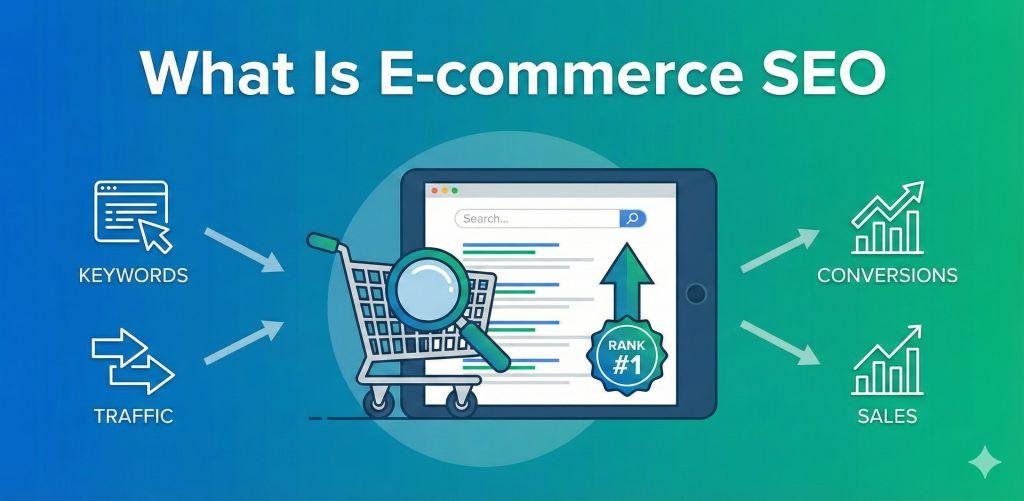
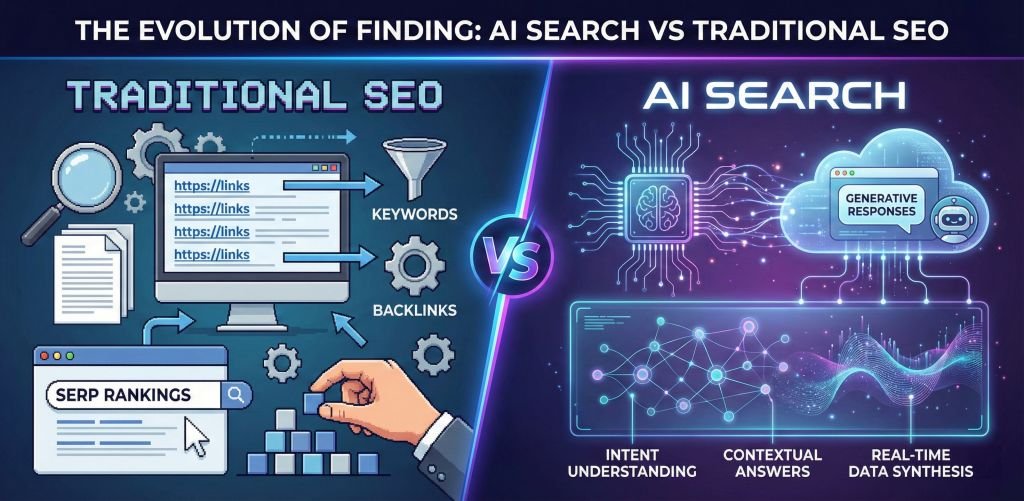
In the hyper-competitive world of digital retail, e-commerce SEO is no longer just about keywords—it’s about survival. With the rise of AI-driven search (SGE) and shifting consumer behaviors in 2026, simply listing products isn’t enough. You need a robust, data-backed strategy to ensure your products are found, clicked, and purchased.
At YoGrow Solutions Pvt Ltd, we’ve helped countless brands navigate this evolving landscape. Whether you’re a startup on Shopify or an enterprise on Magento, this guide covers everything you need to know to dominate the SERPs (Search Engine Results Pages).
E-commerce SEO (Search Engine Optimization) is the process of optimizing an online store’s website to rank higher in search engine results for relevant queries. Unlike typical SEO for blogs, e-commerce SEO involves grappling with unique challenges like thousands of product pages, duplicate content issues, and site architecture complexity.
The goal isn’t just traffic; it’s qualified traffic—users who are ready to buy.
Organic Traffic is “Free” Recurring Revenue: Unlike paid ads (PPC), where traffic stops the moment you stop paying, robust seo for ecommerce websites builds a sustainable funnel of potential customers.
High Intent: People searching for “buy wireless headphones” or “best organic skincare” are at the bottom of the funnel. Ranking for these terms drives sales.
Brand Authority: Ranking #1 signals trust. In an era of scams, being the top result validates your legitimacy.
To succeed, you need a holistic approach. Here is the framework we use at YoGrow Solutions.
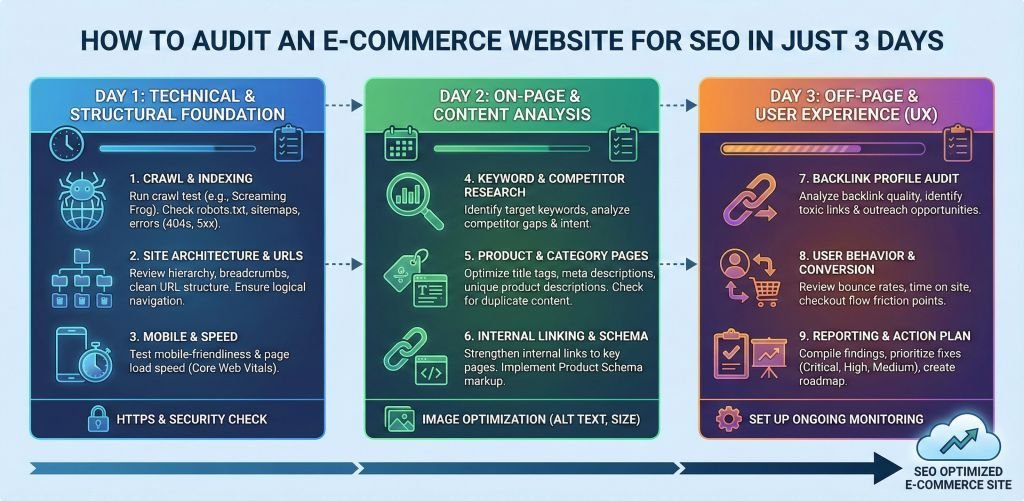
Before you write a single product description, your foundation must be solid.
Site Speed & Core Web Vitals: Google demands speed. Online shoppers demand it even more. A 1-second delay can drop conversions by 7%.
HTTPS & Security: Essential for trust and ranking.
Mobile-First Indexing: Most e-commerce traffic is mobile. If your site isn’t perfectly responsive, you won’t rank.
Structured Data (Schema Markup): Use Product, Review, and Organization schema to get those rich snippets (stars, price, availability) in search results. This increases CTR (Click-Through Rate) significantly.
Sitemap & Robots.txt: Ensure Google can crawl your thousands of SKUs efficiently.
Old school research looked at volume. Modern research looks at Intent.
Commercial Intent: “iPhone 15 Pro Max price” (User wants to buy).
Informational Intent: “Best smartphones for photography 2026” (User is researching).
Transactional Intent: “Buy noise-canceling headphones online”.
Tools to Use:
Google Keyword Planner: For baseline data.
Ahrefs / Semrush: For competitor gap analysis.
YoGrow’s Approach: We look for “low hanging fruit”—keywords with decent volume but lower difficulty where we can rank quickly while building authority for harder terms.
This is where most stores fail.
Product Titles: Don’t just use the manufacturer name. Use formula: Brand + Model + Key Feature + Color + Size.
Bad: “Running Shoes”
Good: “Nike Air Zoom Pegasus 40 – Men’s Running Shoes – Black”
Unique Descriptions: Never copy-paste manufacturer descriptions. Google penalizes duplicate content. Write unique, benefit-driven copy for every product.
Optimized URL Structure: Keep it clean. `example.com/category/product-name`. Not `example.com/p?id=123`.
Internal Linking: Link related products (“You might also like”) to pass authority between pages.
A good seo strategy for ecommerce website success relies on structure.
The “3-Click Rule”: Users should be able to reach any product within 3 clicks from the homepage.
Breadcrumbs: Essential for navigation and for showing Google your site hierarchy.
Why blog? Because you can’t rank a product page for “how to choose a laptop”. But you can rank a guide, then link that guide to your products.
Create distinct guides like comparisons, “how-to” articles, and gift guides.
This builds E-E-A-T (Experience, Expertise, Authoritativeness, Trustworthiness).
AI & Visual Search: optimizing images with descriptive Alt Text is crucial as visual search grows.
Voice Search: Optimize for natural language questions (“Where can I buy cheap running shoes near me?”).
Video Content: Product videos increase time-on-page and conversion rates.
Duplicate Content: Variations of products (colors, sizes) creating multiple URLs. Use Canonical Tags to fix this.
Thin Content: Empty category pages or products with no description.
Slow Load Times: Uncompressed images are the usual suspect.
Ignoring 404 Pages: Discontinued products should 301 redirect to the closest equivalent category, not dead-end.
Why choose YoGrow Solutions as your growth partner?
We don’t just “do SEO”. We build revenue engines. unique approach combines:
1. Data-First Strategy: We don’t guess; we test.
2. Holistic Growth: We align SEO with your overall marketing goals (PPC, Social).
3. Transparency: You get clear reports, not jargon.
If you are serious about scaling your online store, you need a partner who understands the nuances of Shopify SEO, BigCommerce SEO, and Magento SEO.
What is e-commerce SEO? It is the most powerful investment you can make for your online business. It provides long-term, compounding returns that paid ads cannot match. By focusing on technical health, user intent, and high-quality content, you can turn your website into a 24/7 salesperson.
Ready to dominate your niche?
Website: https://yogrowsolutions.com
Email: info@yogrowsolutions.com
Phone: +1 (571) 408-6124
Address: 418 BROADWAY, ALBANY, NY 12207






Leave A Reply Now