



In the rapidly evolving landscape of digital marketing, a new frontier has emerged that is fundamentally changing how we approach visibility online. For years, the gold standard has been Search Engine Optimization (SEO)—the art of ranking on the first page of Google. However, with the rise of Large Language Models (LLMs) and AI-powered discovery engines, a new discipline has taken center stage: Generative Engine Optimization (GEO).
As AI engines like Google’s Search Generative Experience (SGE), Perplexity AI, and Bing Copilot become the primary way users find information, the traditional “blue link” is being replaced by direct, synthesized answers. If your brand isn’t cited within these AI-generated responses, you essentially don’t exist in the eyes of the modern searcher.
In this comprehensive guide, we’ll dive deep into what GEO is, why it’s critical for your business in 2026, and the specific strategies YoGrow Solutions uses to ensure our clients dominate the AI era.
Generative Engine Optimization (GEO) refers to the set of techniques used to optimize content so that it is frequently cited, summarized, and recommended by generative AI search engines. Unlike traditional SEO, which focuses on ranking in a list of results, GEO focuses on being the “source of truth” that the AI uses to construct its answer.
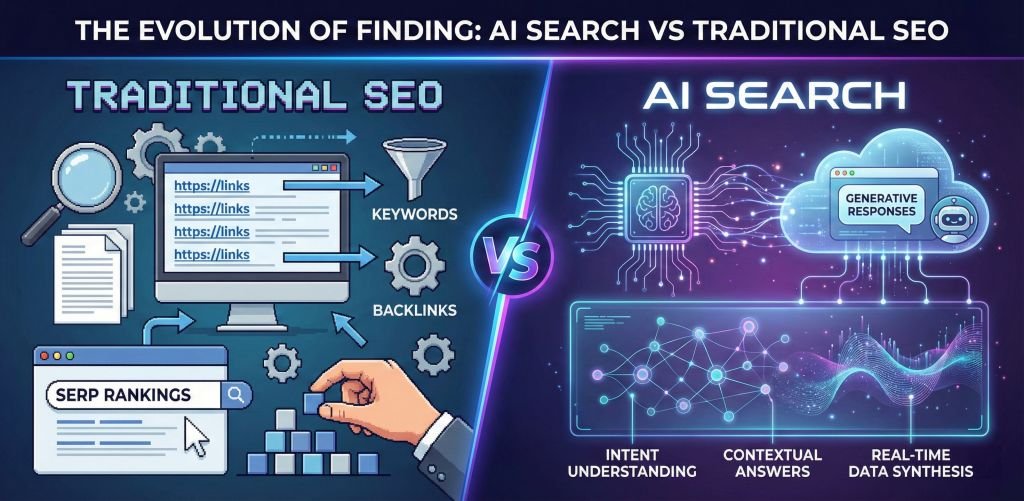
While SEO is built for crawlers and indexes, GEO is built for Large Language Models. These models don’t just “index” keywords; they understand semantic relationships, authority, and factual accuracy. To succeed in GEO, your content must be structured in a way that an AI can easily parse, verify, and relay to the user.
The data is clear: search behavior is shifting. By 2026, it is estimated that over 60% of informational queries will result in “zero-click” answers, where the AI provides the complete solution without the user ever clicking a link. This doesn’t mean traffic is dying; it means the nature of traffic is changing. Instead of high-volume, low-intent clicks, GEO drives high-authority citations that build massive brand trust.
According to a landmark study by researchers at Princeton and Georgia Tech, implementing specific GEO techniques can increase a brand’s visibility in AI responses by up to 40%. In a world where AI is the gatekeeper, missing out on GEO is no longer an option.
Through extensive research and testing at YoGrow Solutions, we’ve adopted the 9 key optimization strategies identified by the academic community to boost AI visibility. These are not just “tips”; they are the foundational pillars of GEO.
AI engines are programmed to avoid “hallucinations” (making things up). They prioritize content that includes clear, verifiable citations. By citing external studies, high-authority journals, and primary sources within your content, you make it easier for the AI to “trust” your information and cite you in turn.
Including direct quotes from industry experts or primary sources adds a layer of human authority that LLMs find highly valuable. Quotes serve as “opinion anchors” that AI engines can use to provide a balanced or expert-backed response.
Generative engines love hard data. Content that includes specific percentages, growth figures, and statistical evidence is far more likely to be featured in an AI summary than vague, qualitative descriptions. At YoGrow Solutions, we ensure every content piece is supported by the latest industry data.
Don’t shy away from domain-specific jargon. Using precise technical terms demonstrates expertise. LLMs are trained on massive datasets and can identify when a writer truly knows their subject vs. when they are just scratching the surface.
The “style” of your writing matters. An authoritative, professional, and confident tone signals to the AI that the content is a reliable source of information. Avoid “fluff” and “weasel words” (like “perhaps” or “maybe”).
While “keyword stuffing” is dead in SEO, “keyword relevance” is vital in GEO. You must align your content with the specific phrases and questions that users are asking AI engines. This requires a shift from “short-tail” keywords to “intent-based” long-tail queries.
Despite the need for technical terms, the overall structure must be simple. If an AI can’t easily summarize your 2,000-word article into a 50-word paragraph, it won’t use it. Break down complex concepts into digestible “knowledge bites.”
Grammar and structure are non-negotiable. LLMs are literally “language” models. If your content is disjointed, poorly paced, or grammatically incorrect, the AI will perceive it as a low-quality source.
To stand out from the sea of generic, AI-generated content, use a diverse and unique vocabulary. Using rare but accurate words helps the AI distinguish your content from the “average” baseline of its training data.
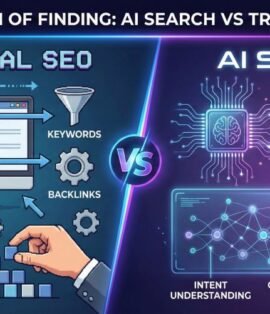
Understanding the difference between these two disciplines is the first step toward a holistic digital strategy.
| Feature | Traditional SEO | Generative Engine Optimization (GEO) |
| Primary Goal | Rank on Page 1 (Blue Links) | Get cited or summarized in AI-generated responses |
| Success Metric | Click-through rate (CTR) and keyword rankings | Visibility score and citation count |
| Algorithm Type | Crawler-based (PageRank-focused) | Model-based (semantic understanding) |
| Content Focus | Formatting, keywords, and backlinks | Factual richness, context, and authority |
| User Intent | Navigational and transactional | Informational and conversational |
While traditional SEO focuses on the structure of the web, GEO focuses on the integrity of the information. At YoGrow Solutions, we don’t choose one over the other; we integrate both to create a “double-threat” strategy that wins on both SERPs and SGE.
Not all generative engines are created equal. Each has its own “personality” and way of citing sources.
Perplexity is the “researcher’s search engine.” It provides inline, numbered citations for almost every claim it makes. To rank here, your content must be factual, well-organized, and include a clear bibliography. Our team at YoGrow Solutions specializes in creating “cite-ready” content that matches Perplexity’s strict attribution needs.
Google’s AI Overviews display sources in a carousel format. Visibility here is tied heavily to your existing “Brand Authority” and the richness of your structured data (schema). Factual summaries and “bullet-pointable” content perform exceptionally well here.
Bing leverages GPT-4 and its own search index. It rewards content that is conversational yet deeply rooted in the Bing search ecosystem. Integrating Microsoft-friendly metadata and focusing on Bing Webmaster Tools is a key part of this sub-strategy.
Many agencies are still playing catch-up with traditional SEO. At YoGrow Solutions, we have already built a proprietary workflow for GEO that sets our clients apart.
1. Entity-Authority Audits: We don’t just look at keywords; we look at how the internet “views” your brand as an entity. We optimize your digital footprint (from Wikipedia to industry forums) to ensure AI engines recognize you as a leader.
2. AI Data Richness: We use advanced analysis to identify gaps in AI responses and create content that specifically fills those voids.
3. Semantic Content Engineering: Our writers are trained to use the Princeton framework, ensuring every article is a “cite-magnet.”
4. Local New York Expertise: While GEO is global, the entities that win are often those with strong local signals. Being a New York-led agency, we understand how to blend global AI strategy with local authority.
The shift to GEO is not just a trend; it is the evolution of the internet. As users move away from browsing and toward “conversing” with their devices, the brands that provide the “answers” will be the only ones that thrive.
This transition requires a mindset shift. Success is no longer measured solely by how many people visited your site, but by how many people heard your brand mentioned as the solution by their AI assistant. This is brand awareness on steroids.
Generative Engine Optimization is the most significant shift in digital marketing since the invention of the search engine itself. It represents a move toward a more intelligent, authoritative, and direct internet.
Is your content ready to be the “source of truth” for the next generation of AI?
At YoGrow Solutions, we specialize in bridge-building between traditional success and future AI dominance. Whether you are looking for a complete GEO audit or a fresh, AI-optimized content strategy, we are here to help your business shine.
Ready to dominate the AI era?



Leave A Reply Now