


In the vast United States digital market, manual SEO is a bottleneck. When you need to target 500 US cities or 10,000 niche product variants, writing individual pages is impossible.
By 2026, programmatic SEO for US-based businesses has evolved from “spamming templates” to building intelligent, data-driven ecosystems. It is no longer about volume; it is about entity-based programmatic SEO that satisfies AI search engines (SGE).
At YoGrow Solutions Pvt Ltd, we engineer scalable growth. Whether you are a real estate giant in New York or a SaaS unicorn in Austin, this guide is your blueprint for programmatic SEO strategy that survives the “Zero-Click” era.
The old way: “Best Plumber in [City]” x 5000 pages (Spam).
The new way: Data driven SEO strategy that generates unique value for every location.
Scale: The US has 19,000+ incorporated places. You cannot target local programmatic SEO USA manually.
Hyper-Relevance: A user in Miami has different intent than a user in Seattle. Location based SEO pages must reflect local nuances (climate, laws, pricing).
AI Saturation: Generic templates are de-indexed. You need LLM powered SEO pages that pass Google’s Quality Rater Guidelines.
Programmatic SEO services USA success starts with the database.
Don’t just use a spreadsheet. Use a headless CMS for SEO (like Strapi or Contentful).
Variables: City Name, Population, Local Landmarks, Weather, Local Review Schema.
Entity Mapping: Connect “Austin” to “Texas,” “Tech Hub,” and “Live Music.” This helps Google SGE programmatic optimization.
Use search intent clustering. Instead of just “marketing agency [city],” cluster by intent:
Commercial: “Best digital marketing [city]”
Informational: “Marketing trends in [city] 2026”
Template driven SEO content must look handcrafted.
Avoid the “Mad Libs” style (“Welcome to [City], the best place for [Service]”).
Dynamic Components: If the city is a coastal town, specific modules should load (e.g., “Hurricane Insurance” vs. “Snow Tires”).
Internal Linking: Automate internal linking automation. “Boston” pages should link to “Cambridge” and “Somerville” pages naturally.
Visual Automation: Auto-generate maps using the Google Maps API for each multi location SEO page.
Publishing 10,000 pages overnight gets you banned. You need indexation control.
Tiered Release: Publish your top 50 revenue cities first.
Canonicalization: Manage canonicalization at scale to avoid duplicate content flags.
Sitemap Splitting: Break XML sitemaps into chunks of 10,000 URLs to convert crawl budget into rankings.
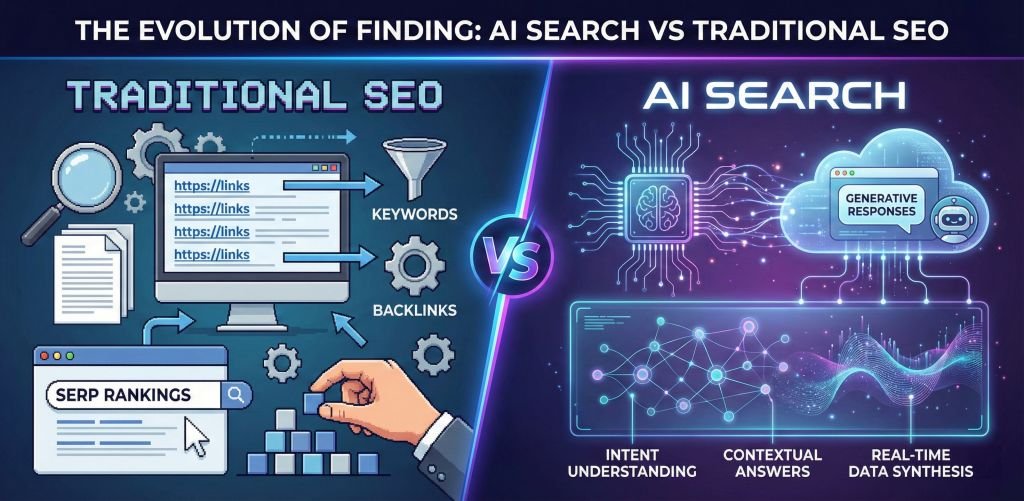
AI driven programmatic SEO is about being cited.
Schema: Implement schema markup automation (LocalBusiness, AggregateRating) on every page.
Direct Answers: Include a “Quick Facts” module at the top of every page for zero click SEO at scale.
Entity Validation: Ensure your data sources (e.g., US Census Bureau) are cited to build trust.
As a premier programmatic SEO agency USA partner, YoGrow Solutions builds systems, not just pages.
Proprietary Tech: We use custom Python scripts to validate data before publication.
Quality Assurance: We use “Sample Testing” (checking 1% of pages manually) to ensure programmatic content SEO quality.
National Reach: We help enterprise SEO USA clients dominate the entire map.
Programmatic SEO for SaaS and local businesses is the leverage point of 2026. It allows you to be “everywhere” without hiring an army of writers. But it requires engineering discipline.
Ready to dominate the US market? Hire programmatic SEO agency USA experts who understand the code behind the rankings.
YoGrow Solutions Pvt Ltd
The Top Growth Partner for US Enterprises.
Website: https://yogrowsolutions.com
Email: info@yogrowsolutions.com
Phone: +1 (571) 408-6124
Address: 418 BROADWAY, ALBANY, NY 12207
Technically millions. But we recommend starting with a few thousand. Crawl budget optimization is the limiting factor, not technology.
Yes. AI driven programmatic SEO is standard. We use LLMs to write unique introductions and conclusions for each page to ensure variety.
It is a high-ticket service. Managed programmatic SEO typically ranges from $5,000 to $20,000+ per month, or a one-time project fee of $30,000+, depending on the data complexity.
Only if it provides no value (thin content). If you provide unique data (e.g., local pricing, specific statistics), it is a highly legitimate and effective scalable SEO strategy.





Leave A Reply Now