Google Search vs. YouTube Search: Navigating the 2026 Discovery Landscape
In the digital world of 2026, the question is no longer “Where should I rank?” but rather “How do I ensure I am discovered?” For years, businesses treated Google and YouTube as two entirely different animals—one for reading and one for watching. However, as the lines between text, video, and AI-generated content blur, understanding the nuances between Google Search and YouTube Search has become the cornerstone of a successful digital growth strategy.
At YoGrow Solutions, we’ve seen firsthand how the most successful brands are those that don’t just pick a platform, but master the synergy between them. Whether you’re a New York startup or an established global brand, your ability to navigate these two search giants will dictate your visibility in the coming years.
1. The Algorithm Battle: PageRank Evolution vs. Viewer Satisfaction
The most fundamental difference between these two platforms lies in what they value most.
Google’s AI-Centric Algorithm
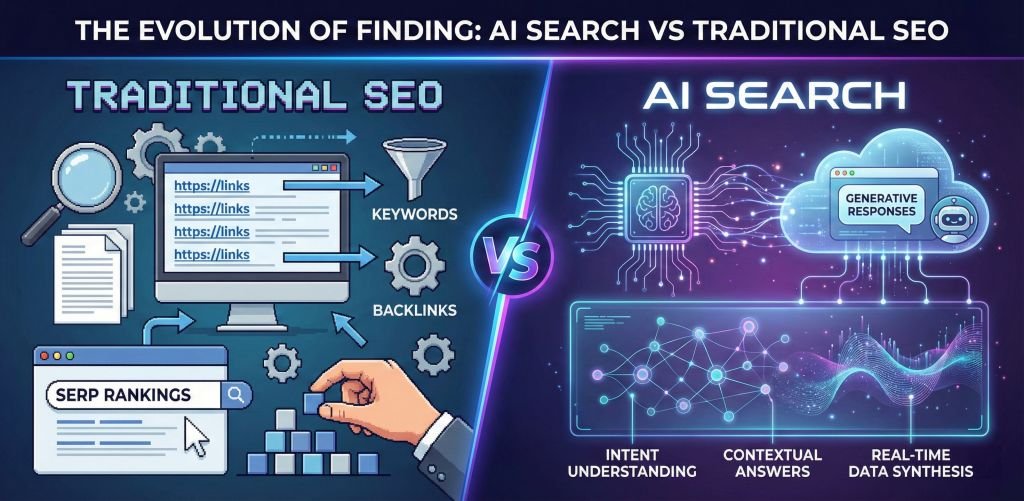
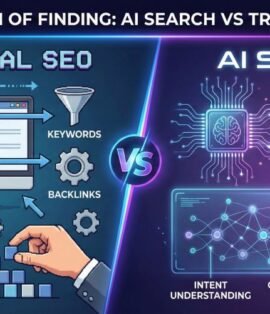
In 2026, Google has moved far beyond the traditional “PageRank” system. While backlinks and technical SEO still matter, the core of the algorithm is now dominated by Semantic Search and E-E-A-T (Experience, Expertise, Authoritativeness, and Trustworthiness). Google’s primary goal is to provide the most accurate, high-authority answer to a query as quickly as possible.
With the integration of Search Generative Experience (SGE), Google now acts as a synthesizer of information. It doesn’t just point to pages; it reads them, summarizes them, and cites them. This means your content must be structured not just for clicks, but for “cite-ability.”
YouTube’s Engagement-Centric Algorithm
YouTube, often called the Second Largest Search Engine, operates on a different logic. Its priority isn’t “efficiency,” but “retention.” The YouTube algorithm cares about Watch Time, Viewer Satisfaction, and Repeatability.
By 2026, raw watch time has been replaced by “Satisfaction Scoring.” Does the viewer stay until the end? Do they interact? Do they come back to your channel? Unlike Google, which wants to give you the answer so you can go about your day, YouTube wants to keep you in the “video rabbit hole” for as long as possible.
2. User Intent: Why Your Audience is Searching
Understanding User Intent is where many marketing strategies fail. People use Google and YouTube for very different reasons.
Informational and Transactional Queries (Google)
People go to Google when they need immediate answers or want to take action.
· “What is the best SEO agency in New York?”
· “How to calculate ROI for digital marketing.”
· “Buy office furniture near me.”
These are “low-friction” queries. The user wants the information now, and they want it in a format they can scan quickly. This is why bullet points, clear headings, and direct answers are vital for Google ranking.
Visual Learning and Entertainment (YouTube)
People go to YouTube when they want to be shown, not just told.
· “How to set up a Google Ads campaign (Step-by-Step).”
· “Review of the latest AI search tools.”
· “Day in the life of a digital marketer.”
YouTube is the home of Visual Learning. If a user is searching on YouTube, they are likely looking for a deeper, more immersive experience. They are prepared to spend 10 to 20 minutes consuming content, as long as it provides high value or entertainment.
3. The AI Revolution: SGE vs. Video Intelligence
The arrival of advanced AI has impacted both platforms, but in vastly different ways.
SGE and the “Zero-Click” Era
Google’s SGE has fundamentally changed SERP Visibility. For many Informational Queries, the AI now provides a full summary at the top of the page. This has led to a rise in “Zero-Click” searches. To survive this, brands must focus on becoming the “cited source” within the AI overview. At YoGrow Solutions, we specialize in engineering content that AI engines find irresistible to quote.
AI-Powered Video Discovery
On the YouTube side, AI has made Content Discoverability more precise. In 2026, YouTube’s AI can “read” the video itself. It understands the spoken word, the text on screen, and even the sentiment of the scenes. Users can now search for specific moments within a video (e.g., “Find the part where they talk about keyword research”). This makes video metadata, transcripts, and chapters more important than ever for Video SEO.
4. Statistics: The Scale of Discovery in 2026
To understand the weight of this comparison, look at the numbers.
Google Search Volume: Processes over 95,000 searches per second globally.
YouTube Reach: Over 2.7 billion monthly active users, with Video Marketing Trends 2026 showing that 82% of all internet traffic is now video-based.
Generational Shift: Among Gen Z and Gen Alpha, YouTube (and increasingly Social Search like TikTok) is often the first place they go for product discovery, bypassing Google entirely for initial research.
5. Advertising: Google Ads vs. YouTube Ads
When it comes to paid growth, the strategies are equally distinct.
Google Ads: Best for “Search Intent.” If someone is searching for a service “now,” a well-placed text ad or AI Overview placement is the fastest way to a conversion. It is built for Conversion Optimization at the point of need.
YouTube Ads: Best for Brand Storytelling and “Demand Generation.” By using YouTube Shorts Ads and shoppable video formats, brands can create desire before a user even knows they need a product. It’s about building an emotional connection that leads to a later search on Google.
6. The YoGrow Edge: A Cross-Platform Search Strategy
At YoGrow Solutions, we don’t believe in silos. A modern brand cannot afford to be “good at SEO” but “bad at Video,” or vice versa. We implement a Cross-Platform Search Strategy that turns these two engines into a single, high-conversion funnel.
Our 3-Step Integration Process:
1. Topical Authority Mapping: We identify the core topics your brand must own. We then create an “Authority Pillar” on Google (Long-form article) and a “Demonstration Anchor” on YouTube (High-quality video).
2. Semantic Synchronization: We ensure that the keywords and semantic signals used in your articles match the audio and metadata of your videos. This “multi-modal” consistency tells AI engines that you are the absolute expert on the subject.
3. Unified Attribution: We track the journey from a YouTube discovery to a Google branded search. This allows us to see the true value of your video content in driving final sales.
7. Conclusion: Winning the Search War in 2026
The battle of Google Search vs. YouTube Search isn’t a zero-sum game. It’s a partnership. Google provides the answers; YouTube provides the experience. In 2026, the brands that “shine online” are those that provide both.
As the search landscape continues to evolve with AI and shifting user behaviors, having a partner like YoGrow Solutions ensures you stay ahead of the curve. We don’t just follow trends; we set the stage on fire.
Is your brand visible where it matters?
Don’t leave your discovery to chance. Partner with the experts who understand the deep mechanics of both Google and YouTube.






Leave A Reply Now